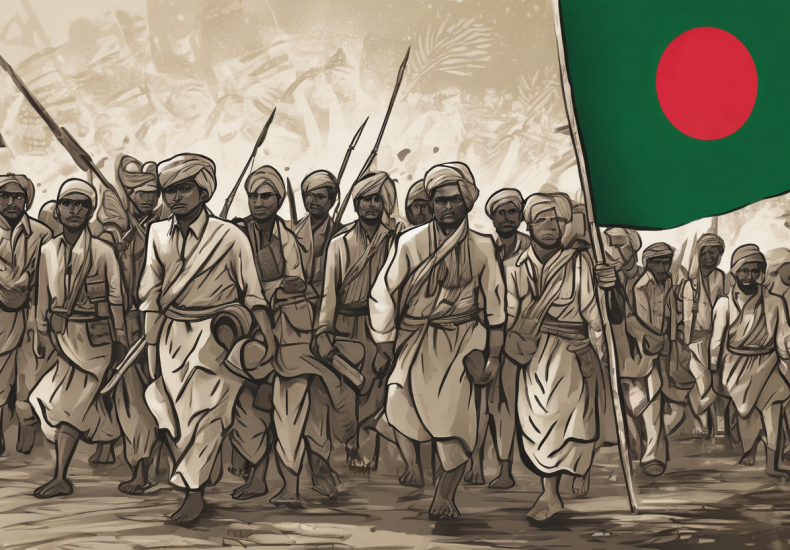
The Long Road to Independence: A Brief History of Bangladesh’s Struggle
Bangladesh’s journey towards independence was a long and arduous one, marked by years of political turmoil and social upheaval. The roots of this struggle can be traced back to the partition of India in 1947, which created two separate countries based on religious lines – India with a Hindu majority and Pakistan with a Muslim majority. The region of Bengal, where Bangladesh is located, was divided into East and West Pakistan, with thousands of miles separating them.
However, this geographical distance did little to bridge the growing cultural, linguistic, and economic differences between East and West Pakistan. The people of East Pakistan felt marginalized and discriminated against by the ruling elite in West Pakistan. The situation only aggravated when West Pakistan imposed Urdu as the sole national language, despite the fact that Bengali was the native language of majority of East Pakistan’s population.
The tipping point came in 1971 when the military junta in West Pakistan launched a brutal crackdown on Bengali civilians, resulting in a mass exodus to neighboring India. The Bengali nationalist movement, led by Bangabandhu Sheikh Mujibur Rahman, declared the independence of East Pakistan and formed the new state of Bangladesh. A nine-month-long war ensued, which saw thousands of casualties and the eventual surrender of West Pakistan’s military forces.
After almost three decades of struggle, the people of Bangladesh finally gained their independence on December 16, 1971. The country has since made significant progress in terms of economic development, social reforms, and political stability. However, the scars of the struggle for independence still remain fresh in the memories of those who fought for the country’s freedom. The resilience and determination of the Bangladeshi people in the face of adversity serves as a reminder of the enduring spirit of independence that continues to shape the nation.